
Are you a readaholic? You pick up a book and somehow, it is glued to your hands and you just can’t put it down. If so, you’re our kind of person and think you’d fit in perfectly at the Dialogue Books community.

We have everything a bookworm could ever want or need on the site, including blogs on famous literary characters, reviews of an amazing collection of books, guides on how to become an author, and lots more.
But, we can’t stop there! We want to bring our readers more exciting blogs and articles. That is why we are very excited to announce that we are acquiring greatbooksguide.com.
As the name suggests, we will be bringing you the greatest books in literary history along with detailed reviews of each one. That way, you can find your next favorite read without traipsing through endless bookshelves at the library (though, we love doing that!)
From the Home by Marilynne Robinson book review to the Gentlemen of the Road book review and the 9 best Michael Chabon books, we take you through the most wonderful literary journey!
Even more importantly, questions like “when was Lord of the Rings written?” or “what happened after Lord of the Rings?” will be fully answered!
To celebrate our acquisition of greatbooksguide.com, we are going to chat about some of our favorite books by genre today. From dystopian futures to historical fantasies, we are sure there is a book for you to enjoy.
So, get comfortable and get ready to explore our favorite books!
Different Genres of Books
There are numerous genres of books, each with their own unique characteristics and themes. To go through each one would require a novel the size of Ulysses, especially if we included sub-genres, too!
To get an idea of some of the most popular and common genres, here are some examples:
Fiction
- Literary fiction
- Historical fiction
- Science fiction
- Fantasy (curious about books like Percy Jackson for adults?)
- Mystery
- Thriller (you might be interested in how many books has James Patterson written)
- Romance
- Horror
- Adventure
Non-Fiction
- Biography
- Autobiography
- Memoir
- History
- Science
- Self-help
- Travel
- True crime
- Philosophy
Children’s Literature
- Picture books
- Early readers
- Chapter books
- Young adult (YA) fiction
Poetry
- Sonnets
- Haiku
- Free verse
- Epic poetry
- Narrative poetry
Drama
- Plays
- Scripts
Reference Books
- Dictionaries
- Encyclopedias
- Atlases
- Thesauruses
Academic and Educational Books
- Textbooks
- Research papers
- Academic monographs
Comic Books and Graphic Novels
- Superhero comics
- Manga
- Graphic memoirs
Historical Fiction
- Alternate history
- Historical romance
Religious and Spiritual Books
- Bible
- Quran
- Religious texts and scriptures
As we said, these are just a few examples of the various genres available in literature. Many books can also fall into multiple genres or subgenres, as authors often blend elements from different categories to create unique storytelling experiences.
What Are The Most Popular Genres?

Before delving into the specific details of the most popular genres in books, let’s begin by exploring the fiction and non-fiction books that have achieved significant sales success.
It’s worth noting that the publishing industry employs the term “genres” to classify books into distinct groups, while Amazon refers to them as “categories.”
Additionally, it’s important to acknowledge that individuals may occasionally categorize books in slightly different ways, but in most cases, the intended meaning remains evident.
In terms of fiction, the most popular sub genres are:
- Romance
- Science Fiction
- Fantasy (here’s an idea – books like Harry Potter for adults)
- Detective & Mystery
- Adventure
- Dystopian
- Thriller
- Horror
- Children’s Fiction
- Historical Fiction
- LGBTQ+
- Young Adult (YA)
The most popular nonfiction genres are:
- Health & Fitness
- True Crime
- Memoir & Autobiography
- Religion & Spirituality
- Biography
- Self-Help
- Art & Photography
- Cooking
- Law & Criminology
- History
- Politics & Social Sciences
- Crafts, Hobbies & Home
- Families & Relationships
- Humor & Entertainment
- Business & Money
- Motivational/Inspirational
- Travel
- Education & Teaching
Best Selling Genres
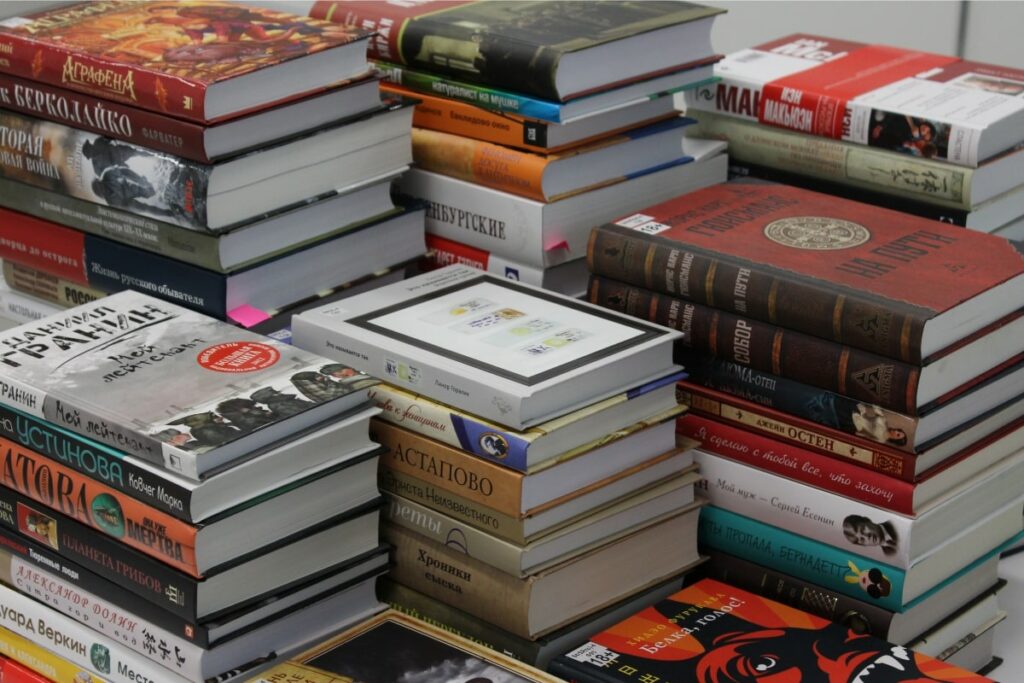
When we look at the best-selling fiction and non-fiction books on Amazon and take into account the number of copies sold, it becomes apparent that the popularity of genres varies between physical books and ebooks.
For physical (hard copy) books, the top five selling categories on Amazon are as follows:
1. Memoirs and Biographies
2. Self Help
3. Religion and Spirituality
4. Health, Fitness, and Dieting
5. Politics and Social Sciences
On the other hand, for ebooks, the top five selling categories on Amazon are slightly different:
1. Religion and Spirituality
2. Biographies and Memoirs
3. Business and Money
4. Self Help
5. Cookbooks, Food, and Wine
These rankings show the preferences of readers in terms of genre when it comes to purchasing physical books versus ebooks on Amazon.
Keeping these genres in mind, let’s explore some of our favorite books in different genres below. Hopefully, you can find your next read from the list.
And if you’re wondering which are the Noble prize winning books, we have a historical account of that!
Fiction
Now, we know that determining the “best” fiction books is subjective and can vary depending on personal taste and literary preferences.
Therefore, you may see some of our choices and disagree. But, that’s okay! Just get in touch with us to share your favorites! We love hearing from our readers.
For now, though, we are going to provide you with five widely acclaimed and highly regarded fiction books that we love.
1. “The Great Gatsby” by F. Scott Fitzgerald – With its stunning portrayal of the Jazz Age and the American Dream, The Great Gatsby is one of the most famous and beloved novels in history.
It explores themes of wealth, love, and the hollowness of materialism. Through its lyrical prose and complex characters, Fitzgerald’s masterpiece offers a powerful critique of society and captures the disillusionment and tragedy of the era.
2. “Brave New World” by Aldous Huxley – A thought-provoking exploration of a dystopian future where individuality is suppressed in favor of stability and happiness. We think that sums up Aldous Huxley’s masterpiece.
Huxley’s novel raises profound questions about the nature of humanity, societal control, and the potential consequences of a world driven by technological advancements.
3. “The Illustrated Man” by Ray Bradbury – We adore Ray Bradbury’s collection of interconnected short stories that blend science fiction, fantasy, and horror.
Through vivid imagery and evocative storytelling, Bradbury explores timeless themes such as the human condition, the power of imagination, and the consequences of technology, leaving readers captivated by his imaginative and thought-provoking narratives.
4. “The Book Thief” by Markus Zusak – The Book Thief has a truly unique narrative perspective, with Death serving as the narrator, offering a poignant and haunting exploration of humanity, resilience, and the power of words during the backdrop of Nazi Germany.
Zusak’s masterful storytelling, complex characters, and profound themes of love, loss, and the importance of literature combine to create a deeply moving and unforgettable reading experience.
5. “Beloved” by Toni Morrison – Masterful storytelling and exploration of profound themes, such as the lasting impact of slavery, the search for identity, and the haunting legacy of trauma await readers with this classic.
Morrison’s powerful prose, complex characters, and haunting narrative create an emotionally charged and thought-provoking reading experience that sheds light on the historical and psychological scars of slavery.
These are just five out of a countless number of fiction books. We could go on and on…and on, but we feel these five capture everything we look for in a classic fiction novel.
Non-Fiction
As with fiction books, determining the “best” non-fiction books is entirely and can vary based on individual preferences. However, here are some highly acclaimed and influential non-fiction books that have made a significant impact on us. Let’s have a look at our top five below.
1. “Sapiens: A Brief History of Humankind” by Yuval Noah Harari – Regarded as one of the most fascinating nonfiction reads, this book has a sweeping exploration of human history, spanning from the emergence of Homo sapiens to the present day, offering thought-provoking insights into the collective journey of our species.
Harari’s captivating writing style and ability to distill complex concepts into accessible narratives make this book an enlightening and intellectually stimulating read that challenges readers to reconsider their perspectives on humanity and our place in the world.
2. “Thinking, Fast and Slow” by Daniel Kahneman – Offering a groundbreaking exploration of human decision-making and cognitive biases, “Thinking, Fast and Slow” provides valuable insights into how our minds work and the pitfalls of our thought processes.
Kahneman’s extensive research and engaging writing style make this book an enlightening and eye-opening read that encourages readers to question their own thinking patterns and enhance their understanding of human behavior.
3. “The Power of Habit” by Charles Duhigg – With its compelling exploration of how habits shape our lives, this critically acclaimed book provides practical insights on how to change and harness the power of habits to achieve personal and professional success.
Through captivating storytelling and scientific research, Duhigg offers readers a deep understanding of the psychology behind habits and empowers them to make positive transformations in their behavior and daily routines.
4. “Guns, Germs, and Steel: The Fates of Human Societies” by Jared Diamond – “Guns, Germs, and Steel: The Fates of Human Societies” offers a thought-provoking analysis of the factors that have influenced the course of human history, such as geography, agriculture, and technology.
Diamond’s comprehensive research and compelling arguments shed light on the inequalities and patterns that have shaped different societies, challenging traditional narratives and offering a fresh perspective on the development of civilizations.
5. “The Gene: An Intimate History” by Siddhartha Mukherjee – Want to explore the history, science, and ethical implications of genetics? “The Gene: An Intimate History” has a comprehensive and accessible account of the profound impact genes have on human life.
Mukherjee’s storytelling prowess and ability to blend scientific knowledge with personal narratives create a compelling narrative that delves into the complexities of genetics and leaves readers with a deeper understanding of the fundamental building blocks of life.
We have to say it again – these are just a few of our favorite non-fiction novels. We’re not saying they are the best nonfiction reads out there, but we enjoyed every page of each one. We highly recommend them, but, as ever, please get in touch with us to let us know your favorite non-fiction texts.
Do check out our detailed book reviews to find out further recommendations from us.
In Summary
From science fiction to romance and historical fantasies to scientific research texts, there are books out there to interest every one of us.
Or fantasy, which is one of our most beloved genres here at Dialogue Books! After all, who doesn’t want to know what is the longest Harry Potter book or how old is Percy Jackson? But most importantly, is Life of Pi a true story?
So many questions that we hold the answer to! Also, don’t forget, we will have a lot more for you regarding our acquisition of greatbooksguide.com.
And just in case you want to learn how to gift an Audible book, we have a guide on that. Check it out!
Until next time, happy reading!